Oral Surgery in Sarasota, FL
Bone Grafting
When the jaw has lost bone, grafting rebuilds it — restoring a strong foundation for dental implants and preserving your facial structure. Modern techniques make it a routine, predictable and comfortable procedure.
The Basics
What is bone grafting?
Bone grafting is a procedure that rebuilds or reinforces bone in the jaw where it has been lost or is too thin to support dental implants. Your surgeon places graft material in the site, which acts as a scaffold that your body gradually replaces with its own new, healthy bone. Once the area has healed and matured, it can securely anchor an implant — or simply preserve the shape of your jaw and face.
Although grafting may sound extreme, today’s materials and techniques make rebuilding bone in the mouth a routine, predictable and virtually painless procedure. It is often the first step that makes dental implants possible for patients who were once told they had too little bone.
The Short Answer
Why is bone grafting needed?
Bone in the jaw needs the stimulation of natural teeth to stay strong. When a tooth is lost, the surrounding bone begins to shrink almost immediately — most people lose about 25% of the supporting bone width within the first year. Gum disease, facial injury, infection and long-term denture wear can accelerate that loss. Grafting restores what has been lost, so implants can be placed and your bite, appearance and oral health can be fully rebuilt.
Advanced Care
Major and minor bone grafting
Most grafts are minor procedures done comfortably in our office to rebuild a single site for an implant. Bone grafting can repair implant sites with inadequate bone from previous extractions, gum disease or injury, using bone from a tissue bank or your own bone. When needed, a sinus bone graft restores bone in the upper back jaw, and special dissolvable membranes can be placed to protect the graft and encourage new bone to form — a technique known as guided bone or tissue regeneration.
Larger, or major, bone grafts repair significant defects of the jaws — those caused by traumatic injury, tumor surgery or congenital conditions. These use the patient’s own bone, harvested from sites such as the hip, lower leg (tibia) or skull, and are typically performed in an operating room with a short hospital stay.
Materials
Types of graft material
Our surgeons are trained in every available grafting technique and will recommend the approach best suited to your goals:
- Autogenous bone — your own bone, harvested from another site, for the most natural integration.
- Allograft — sterile, processed donor bone that provides a proven scaffold for new growth.
- Xenograft — a safe, biocompatible mineral graft that supports the body’s own bone formation.
- Bone morphogenetic protein (BMP) — a protein that actively stimulates your body to grow new bone.
- Platelet-rich plasma and fibrin — growth factors concentrated from a small blood draw to speed healing.
Is It Right for You?
Signs you may need a bone graft
- You have been missing one or more teeth for some time
- You want dental implants but were told you lack enough bone
- You have a tooth that needs to be extracted
- You have experienced gum disease or a jaw infection
- You have worn a denture for many years
- You have suffered facial trauma affecting the jaw
Why Choose Us
Why choose Sarasota Oral & Implant Surgery?
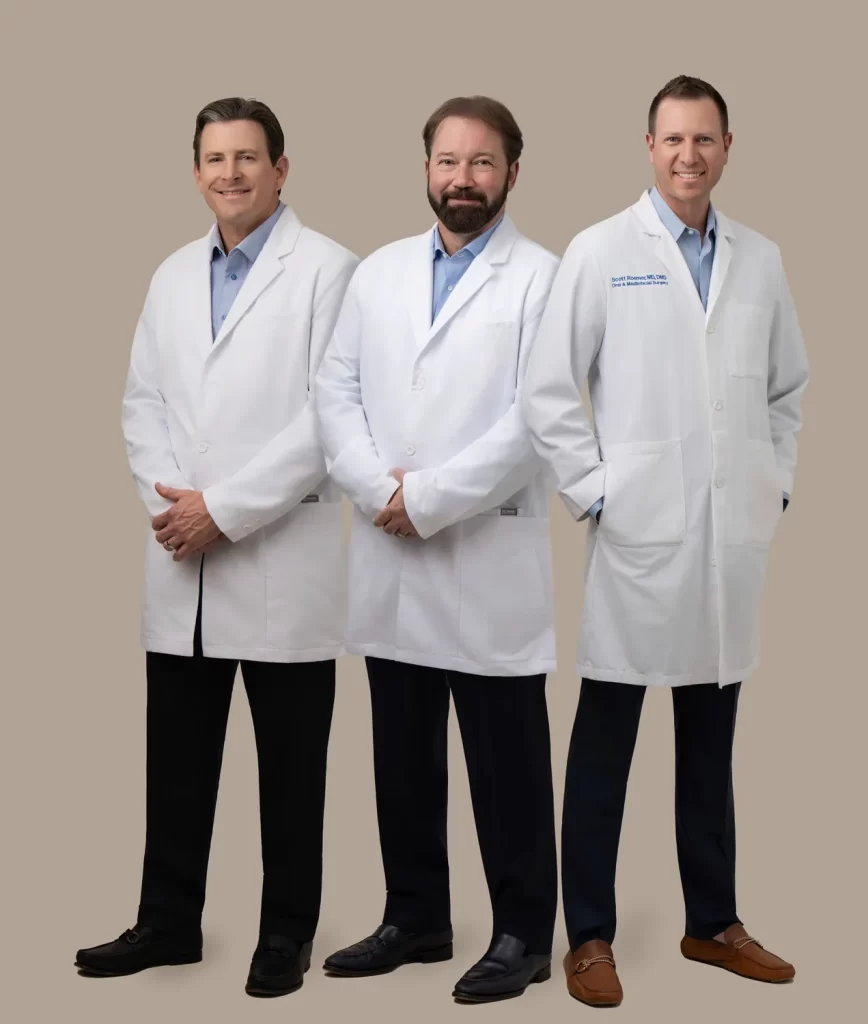
Our oral and maxillofacial surgeons bring both medical and dental training to every procedure, so you get expert diagnosis and comfortable, precise care from consultation to recovery.
- Dual-degree surgeons (DMD and MD) with advanced anesthesia training
- Board-certified Diplomates of the American Board of Oral & Maxillofacial Surgery
- Decades of experience across thousands of successful cases
- 3D imaging and modern technology for precise, predictable results
- A full range of sedation and comfort options
- Convenient locations across the Sarasota area
Questions
Frequently Asked Questions
Is bone grafting painful?
The procedure is performed under local anesthesia or sedation, so you should not feel pain during treatment. Most patients experience only mild soreness afterward, easily managed with over-the-counter pain relief.
How long does a bone graft take to heal?
Healing depends on the size and type of graft, but the bone typically takes a few months to mature enough to support an implant. In some cases a graft can be placed at the same time as an extraction or implant.
Do I always need a bone graft before an implant?
No. Many patients have enough healthy bone for an implant without grafting. Your surgeon will use 3D imaging at your consultation to determine whether a graft is needed.
Is bone grafting safe?
Yes. Bone grafting is a well-established, routine procedure. All donor and processed graft materials are rigorously screened and sterilized, and our surgeons have extensive training in bone reconstruction.