
Oral Surgery in Sarasota, FL
Exposure of Impacted Teeth
When a tooth is trapped beneath the gum and can’t erupt on its own, we work with your orthodontist to uncover it and gently guide it into its proper place — preserving a tooth that is difficult to replace.
The Basics
What is an impacted tooth?
An impacted tooth simply means it is “stuck” and cannot erupt into function. Patients most frequently develop problems with impacted third molars, or wisdom teeth, which get trapped at the back of the jaw and can cause painful infections, among other problems.
Factors such as dental crowding, developmental delays, and fusion of the overlying baby tooth to the jawbone can all prevent a permanent tooth from erupting naturally. After the wisdom teeth, the teeth most commonly affected are the maxillary canines — also known as the “eye teeth.”
What to Expect
How are impacted teeth treated?
Most impacted teeth can be saved with a combination of orthodontic and surgical care. Your orthodontist and our surgical team work together to bring the tooth into position.
-
Orthodontic prep
Your orthodontist places braces first and creates space in the arch for the impacted tooth to move into.
-
Exposure
Your surgeon gently lifts the gum to uncover the impacted tooth, comfortably under anesthesia or sedation.
-
Bracket & chain
A modified orthodontic bracket with a small chain is bonded to the tooth, then the area is closed to heal.
-
Guided into place
Your orthodontist attaches a light elastic to the chain and steadily guides the tooth into its proper position.
Step by Step
Exposure and bracketing of an impacted tooth
-
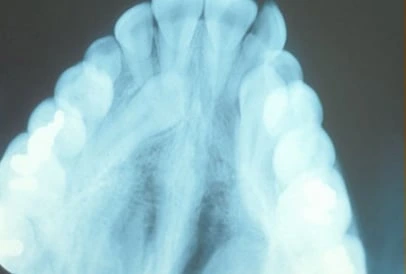
1. Impacted tooth on x-ray
-
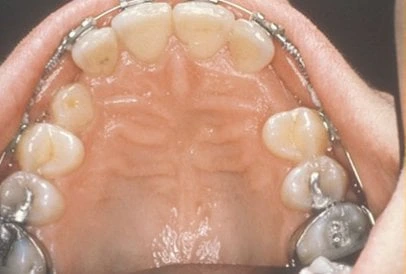
2. Braces create space
-
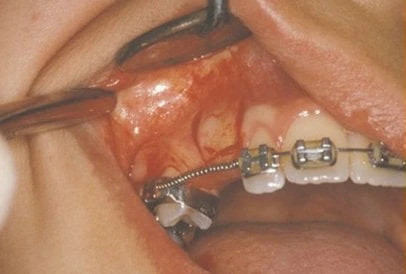
3. Surgical exposure
-
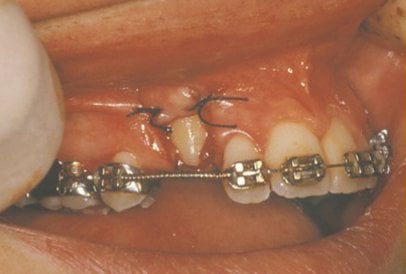
4. Bracket & chain attached
-
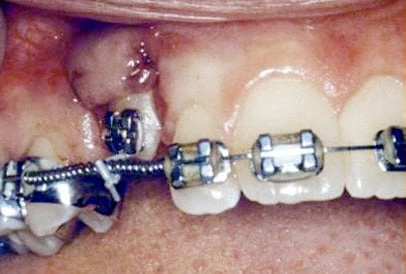
5. Guiding the tooth down
-
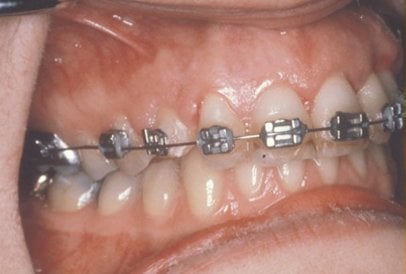
6. Bite corrected
Recovery
What to expect from surgery
Surgical exposure and bonding of the bracket is typically performed right in our office. Some swelling and discomfort is to be expected, but it is usually very mild, and the effects of the surgery are barely noticeable to others. You can expect to see a small portion of the attached chain protruding through the gum; our team secures it to a neighboring bracket with a small wire, which your orthodontist removes at a later visit. The sutures are resorbable and dissolve on their own, and you can resume routine brushing right away — taking care to be gentle around the healing gum.
Why Choose Us
Why choose Sarasota Oral & Implant Surgery?
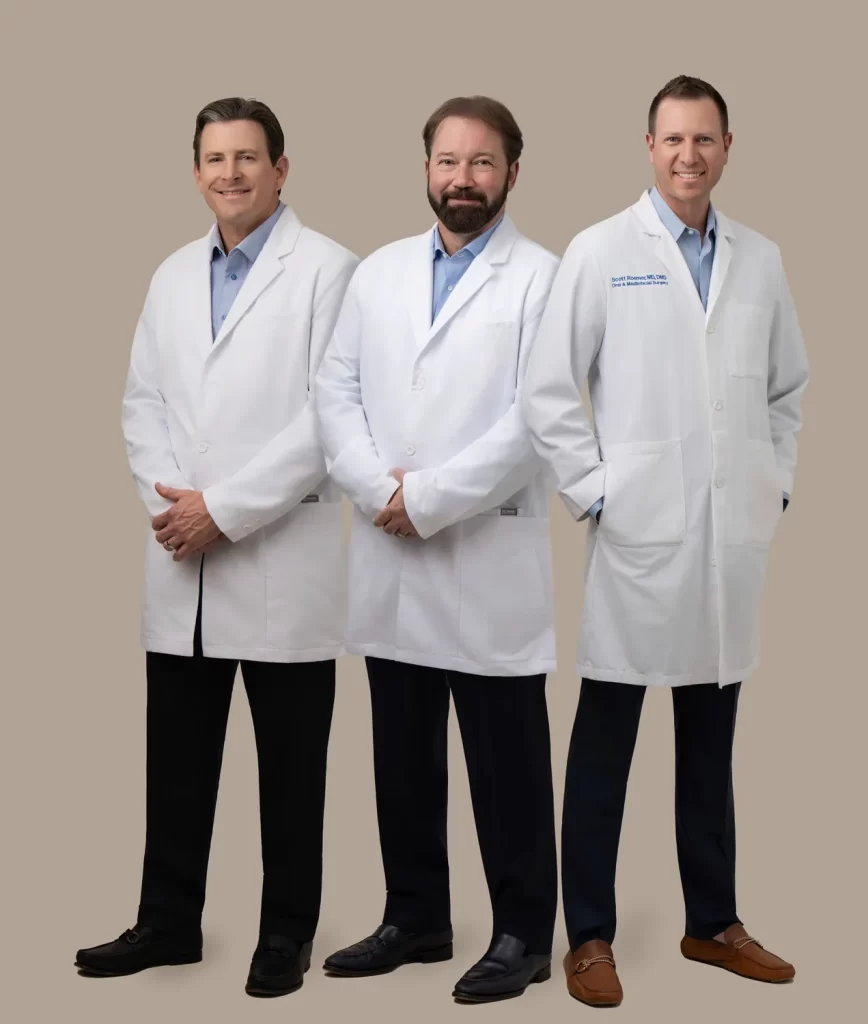
Our oral and maxillofacial surgeons bring both medical and dental training to every procedure, so you get expert diagnosis and comfortable, precise care from consultation to recovery.
- Dual-degree surgeons (DMD and MD) with advanced anesthesia training
- Board-certified Diplomates of the American Board of Oral & Maxillofacial Surgery
- Decades of experience across thousands of successful cases
- 3D imaging and modern technology for precise, predictable results
- A full range of sedation and comfort options
- Convenient locations across the Sarasota area
Questions
Frequently Asked Questions
Can an impacted tooth be saved?
Usually, yes. Rather than removing an important tooth such as a canine, the goal is to expose it and guide it into place. With a combination of orthodontics and a minor surgical procedure, most impacted teeth can be brought into proper position.
Is exposing an impacted tooth painful?
The procedure is performed under local anesthesia or sedation, so you won’t feel pain during treatment. Most patients have only mild soreness afterward, easily managed with over-the-counter pain relief.
How long does it take to move the tooth into place?
It varies. Once the bracket and chain are attached, your orthodontist guides the tooth gradually over a period of months. Your orthodontist can give you a timeline specific to your treatment.
At what age should impacted teeth be evaluated?
Many dentists recommend a panoramic x-ray around age seven to check how the permanent teeth, especially the canines, are developing. Early evaluation gives the best chance of guiding a tooth into place with the simplest treatment.