Oral Surgery in Sarasota, FL
Oral Pathology
The soft tissues of your mouth are normally smooth and coral pink. Any change that lasts — a sore, patch or lump — deserves a closer look. Our surgeons diagnose and treat conditions of the mouth, jaw and face.
The Basics
What is oral pathology?
Oral pathology is the area of oral surgery focused on identifying and treating diseases of the mouth and surrounding structures — from harmless cysts and benign growths to infections and, in some cases, oral cancer. The lining of the mouth is normally smooth and coral pink, so any lasting change in how it looks or feels can be an early warning sign. Catching these changes early is one of the most important things you can do for your health, which is why we encourage regular screening and prompt evaluation of anything unusual.
Warning Signs
Signs to watch for
Contact us if you notice any of the following — especially if it lasts longer than two weeks:
- Reddish or whitish patches inside the mouth
- A sore that fails to heal and may bleed easily
- A lump, rough spot or thickening of the skin or lining
- Chronic sore throat or hoarseness
- Difficulty chewing or swallowing
- A change in the way your teeth or dentures fit together
These changes aren’t always painful, and most turn out to be harmless — but only an examination can tell for certain. When something persists, it’s always best to have it checked.
Prevention
How to perform a self-examination
A simple monthly self-exam helps you spot changes early. In good light and in front of a mirror, take a minute to check:
- The roof of your mouth and the inside of your cheeks and lips
- The top, sides and underside of your tongue
- The floor of the mouth beneath your tongue
- Your neck and jaw, gently feeling for any lumps or swelling
If you find anything that looks or feels unusual and doesn’t clear up within two weeks, give us a call so we can take a look.
What to Expect
Evaluation and biopsy
At your visit, your surgeon will examine the area and review your health history. If a lesion needs a closer look, the most reliable way to reach a diagnosis is a biopsy — removing a small sample of tissue for laboratory analysis. It’s a routine, comfortable procedure performed under local anesthesia. Once we have a clear diagnosis, your surgeon will explain the findings and, if any treatment is needed, walk you through your options and next steps.
Why Choose Us
Why choose Sarasota Oral & Implant Surgery?
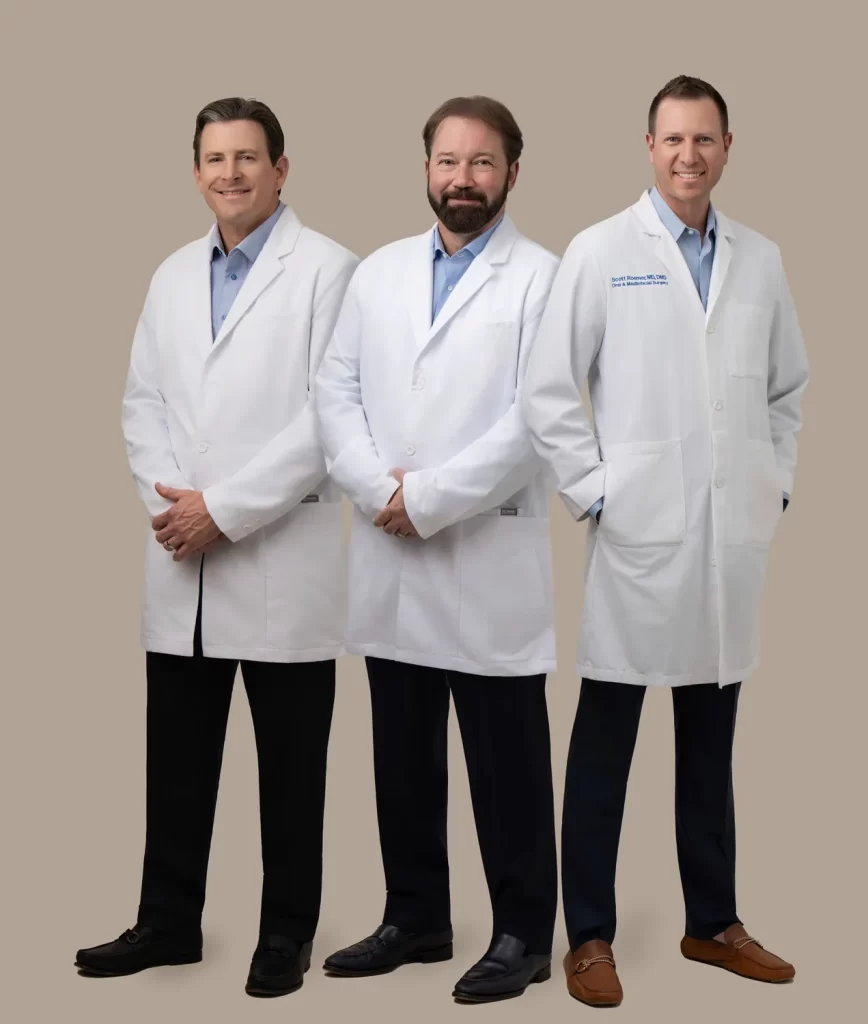
Our oral and maxillofacial surgeons bring both medical and dental training to every procedure, so you get expert diagnosis and comfortable, precise care from consultation to recovery.
- Dual-degree surgeons (DMD and MD) with advanced anesthesia training
- Board-certified Diplomates of the American Board of Oral & Maxillofacial Surgery
- Decades of experience across thousands of successful cases
- 3D imaging and modern technology for precise, predictable results
- A full range of sedation and comfort options
- Convenient locations across the Sarasota area
Questions
Frequently Asked Questions
Are most oral lesions cancerous?
No. The majority of sores, patches and lumps in the mouth are harmless. Still, only an examination — and sometimes a biopsy — can confirm this, so it’s important to have any lasting change evaluated.
How long should I wait before having a sore checked?
If a sore, patch or lump hasn’t healed within about two weeks, have it looked at. Early evaluation gives the best outcome, whatever the cause turns out to be.
Is a biopsy painful?
A biopsy is a quick, routine procedure done under local anesthesia, so you shouldn’t feel pain during it. Any tenderness afterward is usually mild and short-lived.
Who is at higher risk for oral cancer?
Risk is higher for people who use tobacco or alcohol, have had significant sun exposure to the lips, or carry certain strains of HPV. Regular screening is valuable for everyone, but especially if any of these apply to you.