Bone Grafting in Sarasota, FL
About Bone Grafting
Bone grafting rebuilds the jaw where bone has been lost, creating a strong foundation for dental implants and restoring your facial structure. Here’s how the procedure works and what to expect.
The Basics
How does bone grafting work?
A bone graft adds material to an area of the jaw where bone is missing or too thin. That material doesn’t simply fill the gap — it acts as a living scaffold. Over the following months, your body’s own cells migrate into the graft, replacing it with new, healthy bone in a natural process called remodeling. The result is a stronger, thicker ridge of your own bone, ready to support a dental implant or preserve the shape of your jaw.
Grafting is one of the most common procedures in oral surgery. Our surgeons have completed extensive training in bone reconstruction and perform it routinely, often as a straightforward first step on the way to dental implants.
Why It’s Done
When is a bone graft recommended?
Bone loss in the jaw happens for many reasons — a missing tooth that has gone unreplaced, gum disease, infection, injury or years of denture wear. When there isn’t enough healthy bone left to anchor an implant, a graft rebuilds the site so treatment can move forward. A graft may also be placed at the time of a tooth extraction to prevent bone from shrinking in the first place, or added to the upper jaw with a sinus lift when the sinus sits too low.
Your Options
Types of bone grafts
Several kinds of graft material can be used, each with its own advantages. Your surgeon will recommend the one best suited to your needs:
- Autogenous (autograft) — your own live bone, taken from another site such as the chin, jaw, lower leg, hip or skull. It contains living cells that actively grow bone and carries no risk of rejection, but it does require a second site to harvest from.
- Allograft — carefully screened and processed donor bone that acts as a scaffold for your own bone to grow into, with no second surgical site.
- Xenograft — safe, sterilized bone from another species (usually bovine) that provides a similar framework for new bone growth.
- Synthetic substitutes — proven man-made materials such as demineralized bone matrix, graft composites and bone morphogenetic proteins (BMP) that support or stimulate new bone without harvesting any.
What to Expect
What to expect during the procedure
Most grafts are completed in a single, comfortable office visit. Larger reconstructions are carefully staged over more than one appointment.
-
Consultation
Your surgeon reviews your health history and takes 3D imaging to measure the bone and plan exactly where the graft is needed.
-
Anesthesia
You are made comfortable with local anesthesia or sedation, chosen together based on the size of the graft and your comfort.
-
Graft placed
The graft material is placed into the site and gently secured, then the gum is closed — often with dissolvable stitches.
-
Healing
Over the following months your body replaces the graft with new bone, building the foundation for your implant.
Recovery
Healing after a bone graft
Recovery from most grafts is surprisingly comfortable. You can expect some mild swelling and soreness for a few days, easily managed with the medication and simple aftercare instructions we provide. You’ll eat soft foods and avoid disturbing the site while it settles. The graft itself matures more gradually — usually a few months — before it is ready to support an implant. Your surgeon will monitor your progress and let you know exactly when you’re ready for the next step.
Why Choose Us
Why choose Sarasota Oral & Implant Surgery?
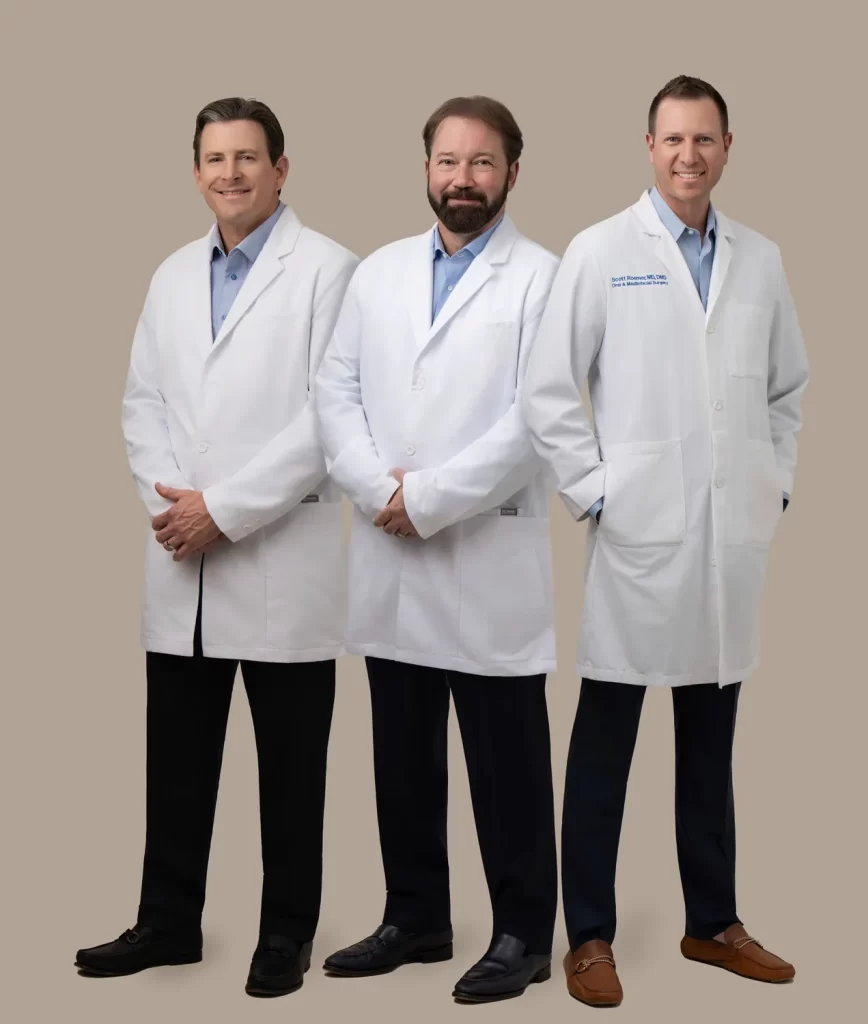
Our oral and maxillofacial surgeons bring both medical and dental training to every procedure, so you get expert diagnosis and comfortable, precise care from consultation to recovery.
- Dual-degree surgeons (DMD and MD) with advanced anesthesia training
- Board-certified Diplomates of the American Board of Oral & Maxillofacial Surgery
- Decades of experience across thousands of successful cases
- 3D imaging and modern technology for precise, predictable results
- A full range of sedation and comfort options
- Convenient locations across the Sarasota area
Questions
Frequently Asked Questions
How long does a bone graft take to heal?
You’ll feel back to normal within a few days, but the graft needs a few months to mature into bone strong enough to hold an implant. The exact timeline depends on the size and type of graft, and your surgeon will track your healing along the way.
Where does the graft material come from?
It depends on your needs. Options include your own bone, rigorously screened and sterilized donor or animal-derived bone, and synthetic materials — sometimes combined with proteins or growth factors that encourage new bone to form. Your surgeon will explain which is best for you.
Is a bone graft painful?
The procedure is done under local anesthesia or sedation, so you won’t feel pain during treatment. Afterward, most patients have only mild soreness that responds well to over-the-counter pain relief.
Can the graft and implant be done at the same time?
Sometimes. Smaller grafts can occasionally be placed along with the implant or at the time of an extraction, while larger grafts usually need to heal first. Your surgeon will recommend the safest sequence for your case.